

Mental Health
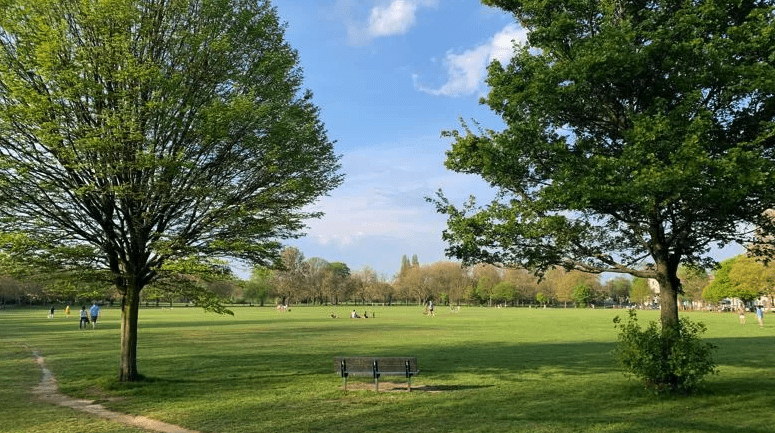
Green space is good for your mental health
- The links between green space and health have been summarized in many publications. An international team of urban health and green space experts discussed the practical side of urban green space interventions and published their findings in a report by the World Health Organisation in 2017.
- Through improved air and water quality, buffering of noise pollution and mitigation of impacts from extreme events, urban green spaces can reduce environmental health risks associated with urban living. In addition, they support and facilitate health and well-being by enabling stress alleviation and relaxation, physical activity, improved social interaction and community cohesiveness. Health benefits include improved levels of mental health, physical fitness and cognitive and immune function, as well as lower mortality rates in general.
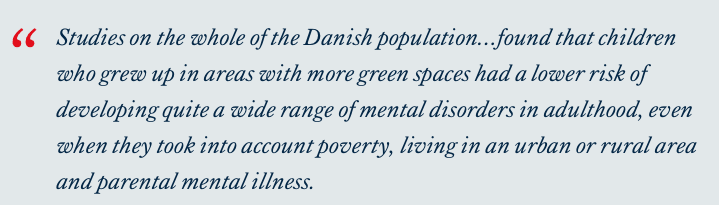
Individuals have less mental distress, less anxiety and depression, greater wellbeing and healthier cortisol profiles when living in urban areas with more greenspace compared with less greenspace. Large differences in disease prevalence are reported when comparing residents of very green and less green settings, even after controlling for socioeconomic status. Quantity of nearby greenspace buffers life stresses – a finding demonstrated across ages and cultures, having been observed both in an adult population from the Netherlands and in a childhood population from rural upstate New York, USA. However, causality is difficult to determine, as self-selection may contribute to the positive relationship between greenspace and better health, because healthier individuals tend to move to or stay in greener neighbourhoods. Nonetheless, individuals who move house from a less green to a more green area have been found to show significantly better mental health in the three post-move years, implying a sustained improvement.
Green spaces During the Pandemic
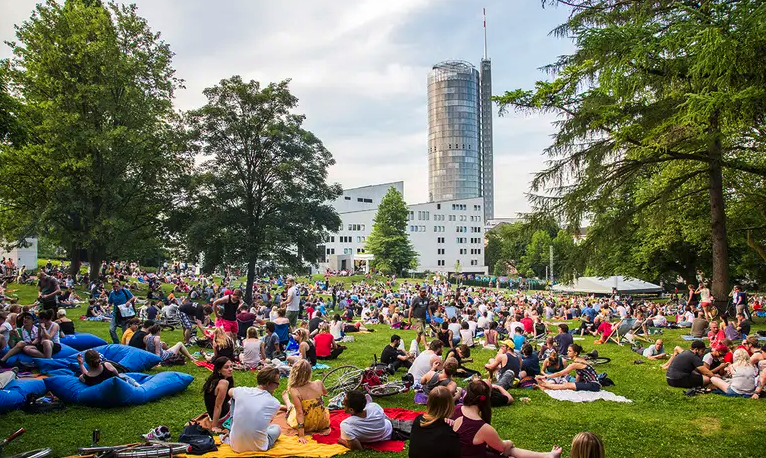
- From the Hanging Gardens of Babylon to the orange gardens of Seville, urban planners down the ages have taken inspiration from nature. And those of us living in the concrete and brick jungle have perhaps never appreciated scraps of green space more than during the covid-19 pandemic. During lockdowns, city dwellers across the world have found parks and gardens – where they exist an unexpected source of calm and joy.
- That comes as no surprise to the growing number of psychologists and ecologists studying the effects of nature on people’s mental health and well-being. The links they are uncovering are complex, and not yet fully understood. But even as the pandemic has highlighted them, it has also exposed that, in an increasingly urbanised world, our access to nature is dwindling – and often the most socio-economically deprived people face the biggest barriers. Amid talk about building back better, there is an obvious win-win-win here. Understand how to green the world’s urban spaces the right way and it can boost human well-being, help redress social inequality and be a boon for the biodiversity we all depend on.
What is Green Space
- Green Space is an umbrella term used to describe either maintained or unmaintained environmental areas, which can include nature reserves, wilderness environments and urban parks. Often, particularly in urban contexts, greenspaces are purposefully designated for their recreational or aesthetic merits.
- Green space is any open piece of land that is undeveloped (has no buildings or other built structures) and is accessible to the public. Open space can include:
- Land that is partly or completely covered with grass, trees, shrubs, or other vegetation (parks, community gardens, and cemeteries).
- Schoolyards
- Playgrounds
- Public seating areas
- Public plazas
- Vacant lots